Slow Feeder Lick Bowl | Non-Slip Base, BPA-Free, 3/4 Cup Capacity, Dishwasher Safe
Couldn't load pickup availability
check_circle Free Shipping
check_circle 30-Day Guarantee
check_circle Secure Checkout
-
Ordered
- - -
Order Ready
- - -
Delivered
Slow Feeder Lick Bowl | Non-Slip Base, BPA-Free, 3/4 Cup Capacity, Dishwasher Safe
You bought the yogurt because the vet said it helps with gut bacteria. Neither supplement is doing much when your dog hoovers it up so fast that it barely touches the sides of their throat on the way down.
Liquid and soft treats are some of the best things you can give your dog. Bone broth for hydration and joints. Plain yogurt for probiotics. Pumpkin puree for digestion. Goat's milk for fussy eaters or dogs recovering from surgery.
The nutritional value is real. The problem is delivery. A standard bowl offers zero resistance. Your dog's tongue covers the entire surface in one pass. The supplement you spent money on is consumed in less time than it took you to open the container.
Lick mats solve part of this problem, but they have their own issues. They slide across the floor unless you suction them down, and the suction fails on about half the surfaces in your home.
The textured surface is a nightmare to clean. Food gets packed into tiny grooves and stays there even after washing, slowly becoming a bacteria farm. And most lick mats are flat, which means your dog pushes them around the kitchen with their face while trying to lick the last traces of yogurt out of the corners.
Then there's the slow feeder bowl for kibble. Ridges and channels that force your dog to eat around obstacles. Works for dry food. Useless for liquids. Broth just fills the channels and your dog drinks it like a puddle with extra steps. You need something designed for wet and liquid foods specifically, not a kibble maze repurposed for something it was never meant to hold.
How It Actually Works
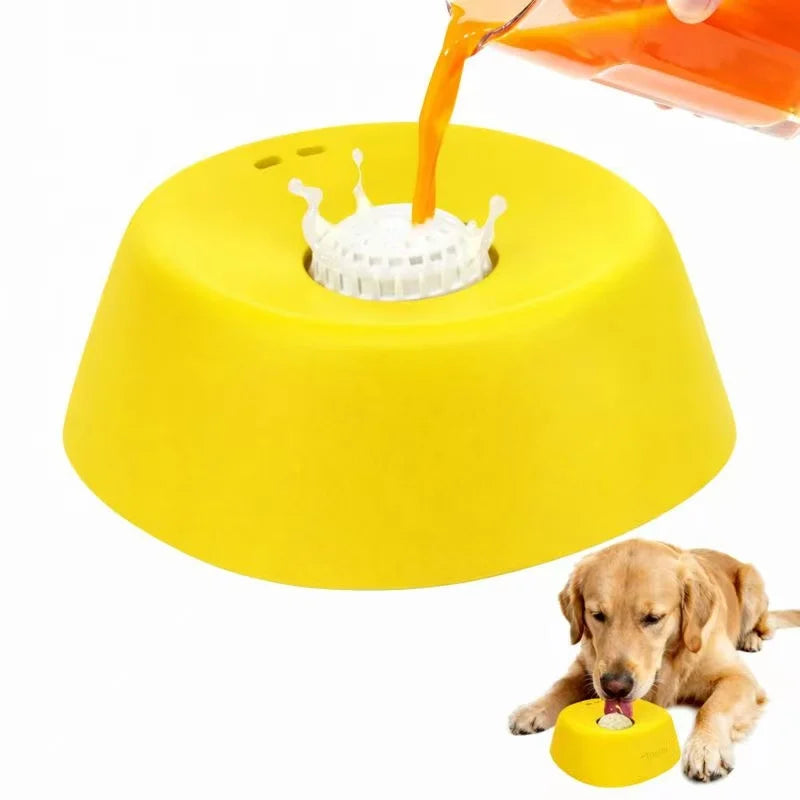
This bowl has a raised bone-shaped structure in the centre that sits above the base of the bowl. When you pour liquid or spread soft food around and over the raised centre, your dog has to lick around, over, and between the contours to access the food. They can't just dip their tongue in and scoop. The shape forces them to work at it from multiple angles, which dramatically slows their intake.
Licking is inherently calming for dogs. The repetitive motion triggers the release of endorphins, which is why dogs lick compulsively when they're stressed. This bowl turns that natural soothing behaviour into a functional feeding tool.
Your dog isn't just eating. They're self-soothing while they eat. That makes this bowl useful beyond mealtimes. Fill it before a thunderstorm, during fireworks, before a vet visit, or when you leave for work. The licking keeps them occupied and physiologically calmer than they'd be staring at the door.
The 3/4 cup capacity is deliberately sized for portion control. It holds enough for a supplemental feeding (a serving of broth, a scoop of yogurt, a meal topper) without being large enough to overfeed. For dogs recovering from surgery or illness who need small, frequent, liquid meals, this is the right volume. It's not a full meal bowl for a large dog. It's a targeted delivery system for supplements, treats, and enrichment feeds.
The bowl is made from BPA-free plastic. No toxic chemicals leaching into your dog's food. The material is durable enough for daily use and won't crack or chip under normal conditions. Your dog can lick aggressively, push the bowl across the floor with their face, and nose it into the wall without damaging it.
The non-slip base keeps the bowl in place on hard floors. Rubber or silicone grips on the bottom prevent the bowl from sliding across the tile while your dog is licking, which eliminates the biggest complaint people have with flat lick mats. The bowl stays where you put it. Your dog can focus on the food instead of chasing the bowl around the kitchen.
It's dishwasher safe. Top rack, regular cycle, done. No hand-scrubbing tiny grooves with a toothbrush. The smooth contours of the raised centre design are easy to clean compared to the fine-textured surfaces on traditional lick mats. Food doesn't get permanently trapped in micro-ridges because there aren't any. The shapes are broad, smooth, and accessible to a sponge or a dishwasher jet.
Colours
Pink, Black, Blue, Green. All function identically. Pick the one that doesn't clash with your kitchen or the one your dog will inevitably push into the middle of the living room.
What to Put In It
Bone broth (unsalted, no onion or garlic). Plain yogurt (unsweetened, no xylitol). Pumpkin puree (plain, not pie filling). Goat's milk. Wet dog food. Mashed banana. Peanut butter (xylitol-free). Blended cooked sweet potato. Any soft or liquid food that your dog can access by licking.
For a frozen enrichment treat, fill the bowl and put it in the freezer for an hour or two. The frozen surface takes significantly longer to lick through and provides extended stimulation on hot days or during long absences. Frozen bone broth in this bowl on a summer afternoon is twenty to thirty minutes of focused, calm licking. That's twenty to thirty minutes your dog isn't pacing, barking, or investigating the bin.
"How is this better than a lick mat?" Three things. It doesn't slide because the non-slip base actually works on hard floors. It's dramatically easier to clean because the surfaces are smooth and dishwasher-safe rather than covered in fine texture that traps food. And it holds liquid. A lick mat can't contain broth. This bowl can. If you're using wet or liquid supplements, a lick mat is the wrong tool. This is the right one.
"Will this work for kibble?" Not really. The raised centre design is built for liquids and soft foods. Dry kibble will just sit around the edges and your dog will eat it at normal speed. If you want a slow feeder for kibble, use a puzzle feeder or a ridged slow feeder bowl. This is specifically for the wet and liquid side of your dog's diet.
"My dog doesn't like broth or yogurt." They might not have been offered it properly. Most dogs who seem uninterested in liquids are actually just uninterested in liquids poured into a regular bowl where they can smell it but can't engage with it meaningfully. The act of licking from a textured surface often generates more interest than drinking from a flat pool. Try a thin smear of peanut butter first. Once your dog is engaged with the licking action, introduce other foods.
"Is it safe to freeze?" Yes. The BPA-free plastic handles freezer temperatures without cracking. Fill it, freeze it, give it directly to your dog. The frozen surface is safe for licking. Don't microwave it. Let frozen contents thaw naturally or under warm running water if your dog needs it softened.
"Can a cat use this?" Yes. The 3/4 cup size is appropriate for cats, and cats are natural lickers. Yogurt, wet food, or broth in this bowl gives a cat the same slow-feeding and calming benefits it provides for dogs. The non-slip base is particularly useful for cats who tend to push bowls around.
"My dog has had surgery and can only eat soft food. Is this suitable?" This is one of the best use cases for it. Post-operative dogs who need small, frequent liquid or soft meals benefit from a bowl that controls portion size (3/4 cup) and slows intake so they're not gulping and straining their healing body. The licking action is gentle and doesn't require the jaw engagement that chewing does. Ask your vet about what to feed and use this bowl for how to feed it.
Backed by our 30-Day Satisfaction Guarantee.
You pour a serving of bone broth into the bowl and set it on the kitchen floor. Your dog approaches, sniffs, and starts licking. And keeps licking. The broth pools in the recesses around the raised centre. Your dog works their tongue around the bone shape, into the gaps, across the contours. One minute passes. Two minutes. Five. They're still going. The broth that would have vanished from a regular bowl in four seconds is lasting ten minutes because your dog has to earn every lick.
Their breathing slows. Their body relaxes. The frantic energy that usually accompanies feeding is completely absent. They're focused, calm, and working methodically through a task that engages their brain and their tongue at the same time.
When they finish, they lick the bowl clean and walk away settled. Not looking for more. Not pacing. Not immediately redirecting their energy toward the nearest chewable object. Just calm. Full. Done.
That's what slow feeding looks like when the tool is designed for the food you're actually giving them.
FAQs
Q: How long does it keep my dog occupied? A: Depends on what you fill it with and whether it's frozen. Liquid broth at room temperature lasts five to ten minutes for most dogs. A frozen yogurt fill can last twenty to thirty minutes. Peanut butter smeared across the centre surface sits somewhere in between. The thicker and colder the food, the longer the session.
Q: Does the non-slip base work on all floors? A: It works best on smooth hard floors: tile, hardwood, laminate, vinyl. On textured surfaces or carpet, it stays put even more firmly. The only surface where it may struggle is very smooth polished stone or wet floors where nothing grips well. For most kitchens and living rooms, it holds.
Q: Is one bowl enough or should I buy two? A: Two is useful. One in use, one in the dishwasher or freezer. If you use the bowl daily or rotate between fresh and frozen fills, having a second means your dog never has to wait while the bowl is being cleaned or prepped. The price point makes buying two practical.
Q: What size dogs is this for? A: The 3/4 cup capacity works for dogs of all sizes as a supplemental feeder or treat bowl. For small dogs, it can serve as a meal-sized portion. For medium and large dogs, it's a topper, supplement, or enrichment session rather than a full meal. It's not a primary food bowl for a 30kg dog. It's a tool for specific uses regardless of breed size.
Q: Will my dog chew the bowl? A: The plastic is durable enough for daily use but not designed to withstand a dog treating it as a chew toy. If your dog tends to pick up and gnaw on their bowl after it's empty, remove it once licking is done. The bowl is a feeding tool, not a toy. When the food is gone, put it away.